October 12-16, 2026, National Exhibition and Convention Center (Shanghai Hongqiao)
Metalworking and CNC Machine Tool Show
Leading International Exhibition for Machine Tools, Sheet Metal,
Pipes & Tubes Production, Mould & Die Construction, Tools
汉诺威米兰展览(上海)有限公司
汉诺威米兰展览(上海)有限公司
汉诺威米兰展览(上海)有限公司
汉诺威米兰展览(上海)有限公司
汉诺威米兰展览(上海)有限公司
汉诺威米兰展览(上海)有限公司
汉诺威米兰展览(上海)有限公司
021-2055 7138/7140/7141
Press Service
Press Service
HOME > Media & Press > Exhibitors Dynamic > Exhibitor News | Tackling High-Mix, Low-Volume Bending Challenges with the LAG® RBC Robotic Bending Cell
Exhibitor News | Tackling High-Mix, Low-Volume Bending Challenges with the LAG® RBC Robotic Bending Cell
Sharing:

Introduction : 

As high-mix, low-volume production and short lead times become the new norm in manufacturing, traditional bending production is facing unprecedented challenges — frequent changeovers, repeated teaching and programming, and heavy reliance on experienced operators.The LAG® RBC Robotic Bending Cell makes changeovers without repeated teaching and first-piece production without trial runs a reality.

01

Three Major Challenges of High-Mix, Low-Volume Production

More and more sheet metal manufacturers are finding that the traditional “high-volume, low-mix” production model is becoming increasingly difficult to sustain.As customised orders increase and product iterations accelerate, manufacturers are being pushed towards flexible high-mix, low-volume production. However, this transition brings three major challenges:

01

Challenge 1: Long Changeover Times

Every time a product model changes, conventional robotic bending systems require manual re-teaching and reprogramming.A single product changeover may take anywhere from half a day to several days. Frequent changeovers result in significant machine downtime and a substantial decline in overall equipment efficiency.

02

Challenge 2: Heavy Reliance on Experienced Operators

Traditional bending relies heavily on operator experience. Decisions such as how much material springback to allow for, what compensation values to set and which tooling to select are largely based on individual judgement.The inherent inconsistency of manual operations makes it difficult to guarantee dimensional accuracy and bending precision. Combined with recruitment difficulties and high labour costs, manufacturers often face the dilemma of “small orders are not economical to accept, yet taking them on can make it difficult to guarantee quality.”


03

Challenge 3: High First-Piece Setup Costs

Every changeover requires trial bending, angle measurement and parameter adjustment, often through multiple rounds of testing before batch production can begin.First-piece setup not only consumes materials and time, but also extends the overall delivery cycle.

02

How Does LAG® Achieve “Changeovers Without Re-Teaching”?

葛世展商动态1.jpg

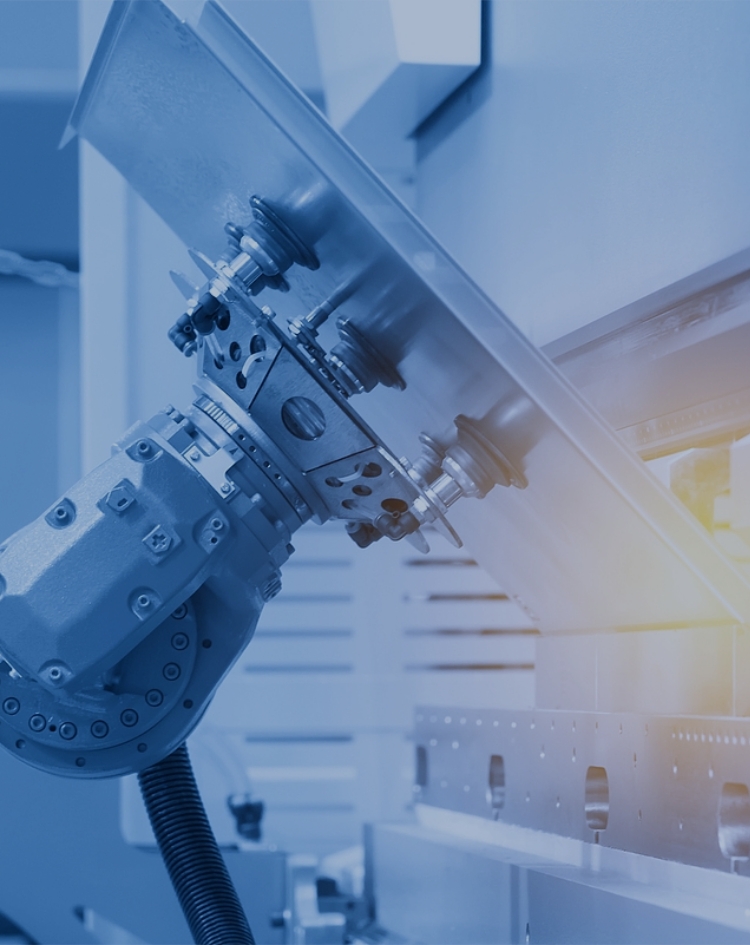
The core breakthrough of the LAG® RBC Robotic Bending Cell lies in: transforming manufacturing experience into algorithms and making bending intelligent.The robot can perform autonomous programming, autonomous processing and automatic compensation, enabling a fundamental shift from manual control to digital control.


01

Visual Offline Programming — No On-Site Teaching Required

The RBC Robotic Bending Cell is equipped with visual graphical offline programming software featuring a simple and intuitive user interface.Engineers can directly import a 3D model of the workpiece into the computer, after which the system automatically generates the bending path and robot programme.When switching products, no first-piece trial run or programming and teaching is required. Operators simply call up the corresponding programme file to begin production.


02

 Adaptive Algorithms — Automatic Deviation Compensation

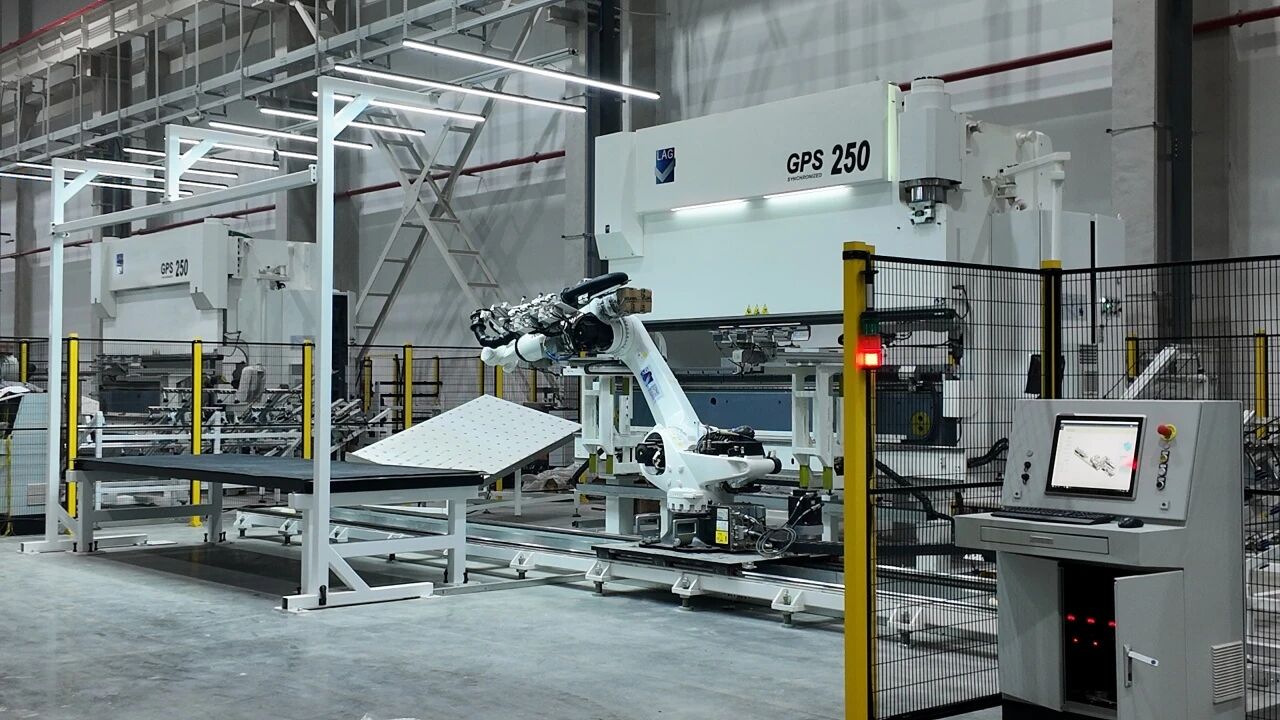
The core technology of the RBC 250 Robotic Bending Cell uses adaptive algorithms to dynamically compensate for material deviations and errors from upstream processes, enabling high-precision closed-loop bending control.This means that even when sheet thickness varies between different batches, or when there are slight deviations in upstream cutting processes, the robot can automatically adapt and adjust, ensuring consistent finished-product accuracy.


03

Automatic Tool Changing — Rapid Product Changeovers: 

The RBC Robotic Bending Cell is equipped with automatic robotic tool-changing technology, ensuring equally high efficiency for both high-mix, low-volume production and large-scale manufacturing.Tool changes are completed automatically without manual intervention, further reducing changeover time.

03

More Than Bending: Flexible Production Across the Entire Process

LAG® solutions extend far beyond the bending process itself. Through the ALL4ONE integrated PC control software, the system can automatically generate processing tasks, start processing units with one click, automatically report production data upon completion, and connect with factory MES/ERP systems, enabling fully digitalised factory production and management.From 3D models and automatic material loading to cutting, sorting and palletising, the entire production process forms a closed-loop automated system — this is what truly defines flexible intelligent manufacturing.


Conclusion : 


As high-mix, low-volume production becomes increasingly common, competitiveness in bending is no longer determined by “how much can be produced at one time,” but by “how quickly can you change over, and how accurately can you produce.”The LAG® RBC Robotic Bending Cell reduces changeover time from half a day to just 10 minutes, turning the first piece from a “trial piece” into a “finished product.”


7a9f40aacd94819c734886bebdaddec.png

2026年展位预订:


展商动态9.png


MWCS 2026 MWCS 2026 — Leading Exhibitors at a Glance


This year, internationally renowned brands includingTRUMPF, AMADA, Bystronic, Salvagnini, Hexagon, Murata, RAS, DURMA and AKE will join leading Chinese companies including HSG Laser, HGTECH, Yawei, Hymson Laser, Yangli Group, Penta Laser, Bystronic DNE, JATEN Laser, JFY, Raytu Laser, Oree Laser, Blue Elephant, ADH, Donghai Yuxiang, Xunlei Laser, Longxin Laser, Teke, RAYMAX, Bodor Laser, Cognex and Accurl,bringing together an impressive line-up of leading companies from China and around the world.


Focusing on fast-growing sectors including AI computing centres, energy storage, new energy vehicles, photovoltaics and wind power, MWCS 2026 will place particular emphasis on advanced solutions for AI computing server cabinets, energy storage cabinets, liquid-cooling components and new energy vehicle component manufacturing.The exhibition will cover core technologies and equipment including laser cutting, laser welding, intelligent bending, flexible manufacturing, automated loading and unloading, and digital production lines, comprehensively showcasing innovations and practical applications across the global sheet metalworking industry.


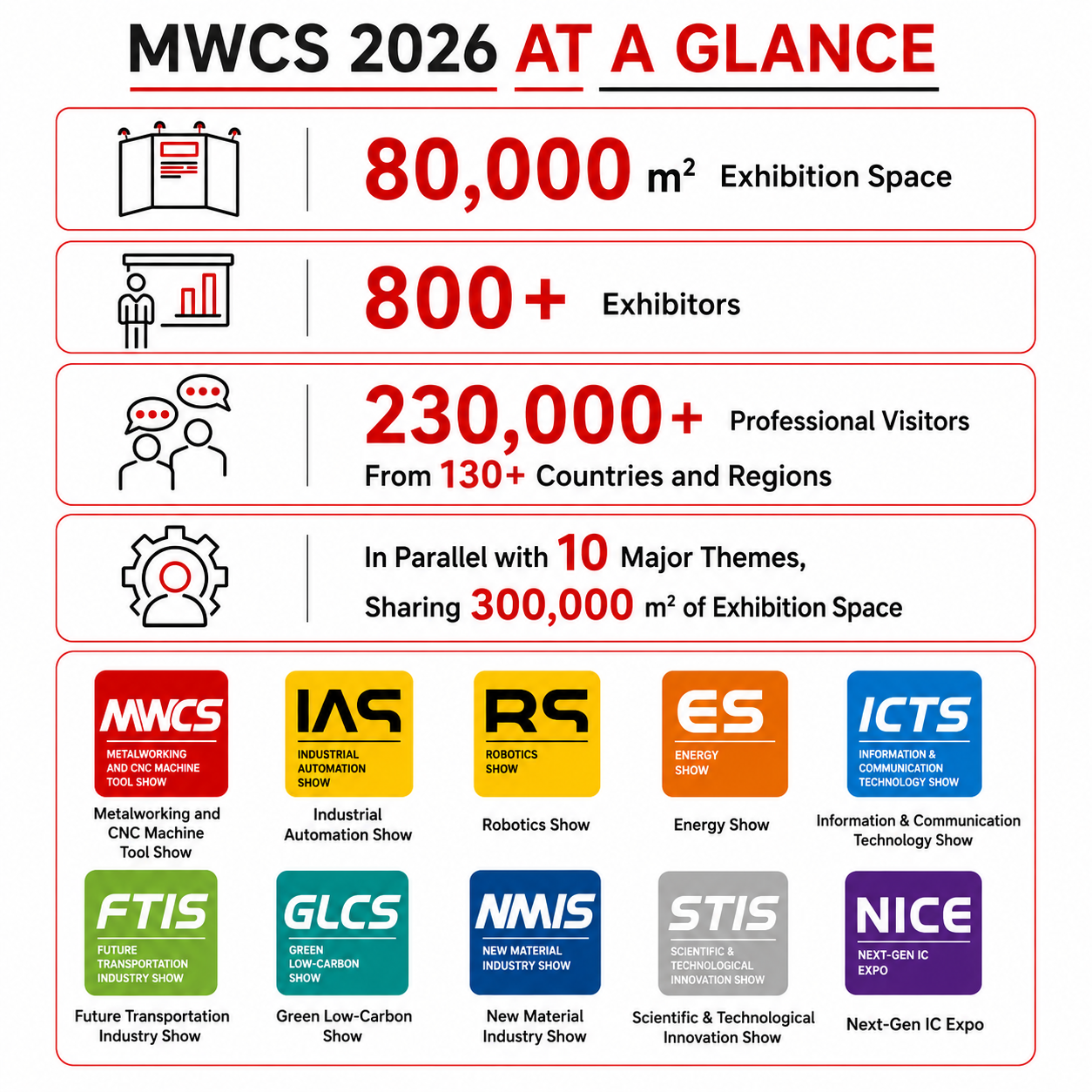
This year’s exhibition will see comprehensive upgrades in scale, technological content and application scenarios, bringing together global brands, cutting-edge manufacturing technologies and extensive industry resources. Booth reservations have now entered the final stage, with remaining spaces selling fast. We sincerely invite industry companies to seize this opportunity, secure a strong market presence, connect with global buyers, and explore new opportunities arising from the rapid development of AI computing and the new energy industry.




MWCS 2026 Booth Reservation

Deutsche Messe AG 

International Sales: Ms. Imke Selle

Tel: +49 511 89-31423 

Email: Imke.selle@messe.de


Group Visits / Media Cooperation

Contacts: Coral Zhang/Zack Jiang 

Tel: +86 21 2055 7142 / 7156

Email: coral.zhang@hmf-china.com

         zack.jiang@hmf-china.com